
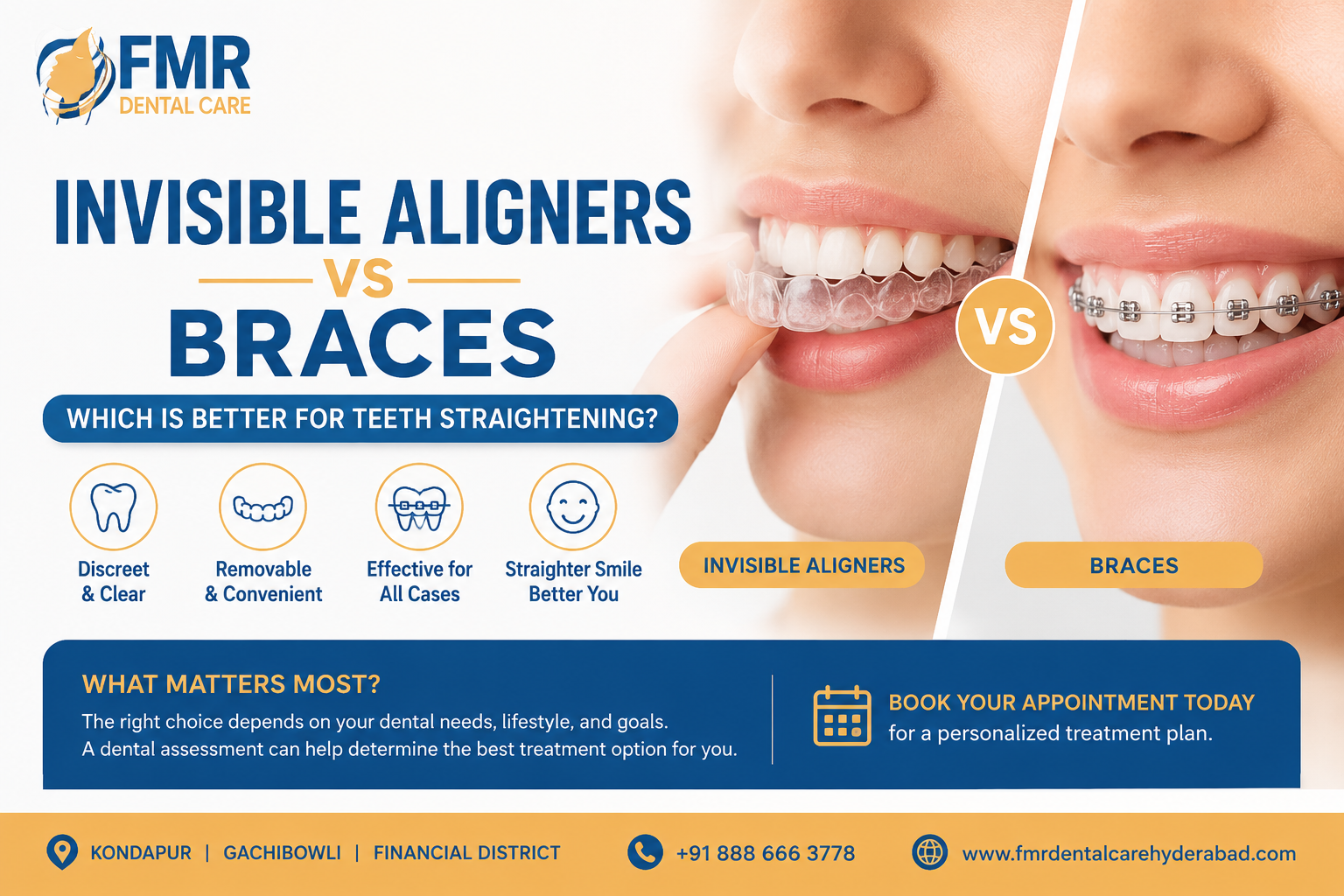
Teeth can become crowded, uneven or develop gaps for many reasons, which may affect both appearance and the way the upper and lower teeth meet. Invisible aligners and braces are two common treatments used to gradually move teeth into better positions. Both options help move teeth into better positions, but the treatment experience is different. The choice depends on factors such as the type of alignment problem, bite, oral health and daily routine.
How Do Invisible Aligners and Braces Straighten Teeth?
Invisible aligners are clear, removable trays made to fit over the teeth. A series of trays is usually planned so that each set moves the teeth in small stages. They are often chosen by people who prefer a less noticeable option and want to remove the trays while eating or brushing.
Traditional braces use brackets and wires that stay fixed to the teeth during treatment. The dentist or orthodontist adjusts them at planned visits to guide tooth movement. Braces can be useful for many alignment and bite concerns, especially when the required movement needs close control.
What Should You Consider Before Choosing a Teeth Straightening Treatment?
When comparing invisible aligners vs braces, the choice should be based on more than appearance, because your dental needs and daily habits also affect treatment planning.
- Type of tooth movement: Mild spacing or crowding may suit clear aligners, while some complex movements may need fixed braces.
- Daily discipline: Removable aligners need to be worn for the recommended number of hours each day to stay on schedule.
- Food and oral care: Aligners come out during meals, while metal braces need more care when eating and cleaning around brackets.
- Lifestyle and appearance: People who prefer a less visible option may feel more comfortable using clear trays during work or social activities.
Comfort, Cleaning and Daily Routine: What Changes During Treatment?
Comfort can vary with both options. New aligner trays may feel tight for a short time as the teeth begin to move. Braces can also cause mild soreness after an adjustment, and the brackets may take time to get used to.
Daily care is another important part of orthodontic treatment. Removable aligners allow normal brushing and flossing after the trays are taken out. With braces, cleaning around wires and brackets needs extra attention. Good oral hygiene is important with either option because plaque can collect if teeth are not cleaned well.
Invisible Aligners vs Braces: Practical Differences to Know
Beyond how they straighten teeth, aligners and braces can affect daily life in different ways. The comparison below looks at practical factors that patients may notice during treatment.
Comparison Point | Invisible Aligners | Braces |
Speech | Some people may notice a slight change in speech when they first start wearing the trays. | Braces usually have less effect on speech after the initial adjustment period. |
Cleaning | Trays can be removed, making it easier to brush and floss normally. | Extra care is needed to clean around brackets and wires. |
Follow-up visits | Progress is checked regularly and new sets of trays may be provided as treatment moves forward. | Regular visits are needed to check the braces and make adjustments when required. |
Damage or loss | Trays can be misplaced, cracked or damaged if they are not stored properly. | Brackets or wires may occasionally loosen or break and need dental attention. |
After treatment | A retainer is usually advised to help maintain the new tooth position. | A retainer is also commonly needed after braces are removed. |
Why a Dental Assessment Matters Before Teeth Straightening
Before starting treatment, the dentist needs to check the health of your teeth and gums and study how your teeth and jaws come together. Photos, digital scans and X-rays may be used to understand the position of the teeth and plan the next steps. This assessment also helps estimate treatment time, follow-up needs and any dental care required before starting. Book an appointment to get a treatment plan based on your dental condition.
Conclusion: Making the Right Choice
The choice between clear trays and braces should focus on your dental needs, comfort, routine and ability to follow the treatment plan. Clear trays offer a discreet, removable option, while braces provide a fixed approach that may suit a wider range of movements. At FMR Dental Care, patients can discuss their teeth straightening goals and understand which option may be suitable after a clinical assessment.